
Flexible Packaging vs Rigid Packaging: Pros, Cons, and Use Cases by Industry

By
••
13 min read
Choosing between flexible and rigid packaging affects cost, sustainability, product protection, shelf appeal, and logistics. This guide explains how each format works, where it fits best, and how industries leverage both to meet performance, regulatory, and consumer expectations. Use it to align packaging decisions with your product requirements and market strategy. For readers comparing flexible packaging vs rigid packaging: pros, cons, and use cases by industry, this overview provides practical insights across categories and channels. It highlights how rigid and flexible solutions can be combined to meet real-world constraints.
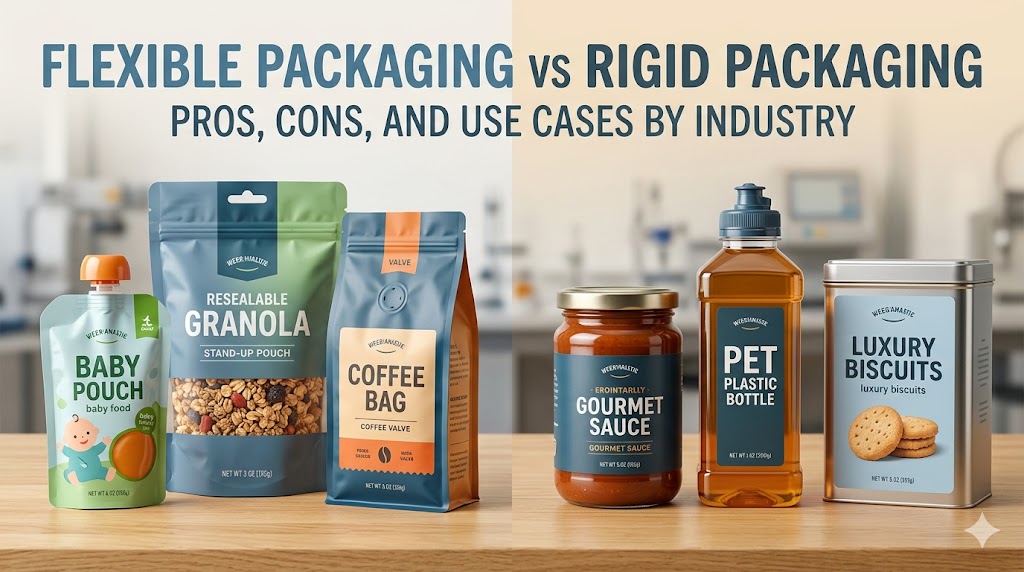
Understanding Flexible Packaging
Flexible packaging includes any format that bends or conforms to the product, such as pouches, sachets, wraps, and liners. These structures rely on thin films, laminates, or paper-based materials designed to deliver barrier performance without the weight or bulk of rigid containers. Typical characteristics include low mass, high material efficiency, customizable barrier properties, and a wide range of convenient form factors. When comparing rigid and flexible options, packaging flexible formats often win on weight and cubing efficiency.
Materials commonly used are polyethylene (PE), polypropylene (PP), polyester (PET), polyamide (nylon), and multi-layer laminates engineered to block oxygen, moisture, light, and aromas. Paper and aluminum foil may be added to increase stiffness or barrier protection. Coatings and metallization can improve shelf life and heat resistance. Closures and features include heat seals, zippers, tear notches, spouts, and fitments that enhance usability, attributes that make packaging flexible systems highly adaptable in retail and e-commerce.
Flexible formats are widely applied across categories: in food and beverage for snacks, coffee, frozen foods, and sauces; in pet care for resealable stand-up pouches; in personal care for single-use sachets and refill packs; in household products for detergent refills and pods; in pharmaceuticals and medical for unit-dose pouches and sterile barrier wraps; and in industrial settings for bulk liners and protective films. They are often selected to reduce shipping weight, enable portion control, and offer on-the-go convenience, especially when evaluating flexible packaging vs rigid packaging: pros, cons, and use cases by industry.
Understanding Rigid Packaging
Rigid packaging retains its shape regardless of contents and includes bottles, jars, tubs, cans, and cartons that require structural integrity and dimensional stability. Core traits are impact resistance, stackability, premium perception, and reliable protection for fragile or pressure-sensitive goods. When choosing between rigid and flexible formats, rigid packaging is the go-to for shape-sensitive, pressurised, or high-visibility products.
Primary materials include glass, metals such as aluminum and steel, and rigid plastics like PET, HDPE, PP, and PS. Paperboard and corrugated fiberboard are used for cartons and shipping cases. Closure systems range from threaded caps and snap lids to pumps, sprayers, droppers, and tamper-evident seals. These systems reinforce the strengths of rigid packaging in dosing accuracy and safety.
Common applications include beverages (water, soft drinks, beer), food (sauces in glass, canned goods), health and beauty (creams, serums, aerosols), pharmaceuticals (pill bottles, vials), electronics (protective cases), and luxury items (high-end cosmetics in glass). Rigid formats excel when precise dosing, display consistency, and robust structural protection are priorities, offering a clear contrast to packaging flexible formats in the broader conversation of flexible packaging vs rigid packaging: pros, cons, and use cases by industry.
Pros and Cons of Flexible Packaging
Advantages
- Lower material usage and weight can reduce unit cost and freight expenses.
- Highly adaptable shapes and sizes support creative designs and strong graphics.
- Functional features like zippers, spouts, and easy-open elements improve usability.
- Tailored barrier layers can extend shelf life and reduce product waste.
- Lightweight construction lowers transport emissions and often performs well in e-commerce with reduced breakage and dimensional weight.
Disadvantages
- Multi-layer laminates are harder to recycle in many regions, and food residue can reduce recovery rates.
- Less structural protection against crushing or puncture compared to rigid containers.
- May convey a lower premium perception in some categories unless elevated through design and finishes.
- Reuse and refill are less common without purposeful design.
Where flexible excels
- Portion packs for snacks and single-serve products.
- Stand-up pouches for sauces, baby food, and ready-to-use mixes.
- Refill pouches for household cleaners and concentrates.
- Single-dose pharmaceutical sachets and medical unit-dose packs.
- Travel-friendly beauty formats where portability and convenience matter.
Pros and Cons of Rigid Packaging
Advantages
- Strong durability, stackability, and impact resistance protect fragile items.
- Premium look and feel can improve brand perception and shelf presence.
- High recyclability for materials like glass, aluminum, steel, and certain rigid plastics with established collection systems.
- Supports precise dosing mechanisms and specialized closures (tamper-evident, child-resistant) for regulated categories.
Disadvantages
- More material and higher unit weight can increase per-unit costs and freight.
- Potential breakage (glass) or denting (metal), increasing packaging or handling requirements.
- Higher storage space needs and potentially larger transport footprints.
- Tooling, mold changes, and design transitions can be slower and costlier.
Where rigid is preferred
- Carbonated beverages and products under pressure.
- Premium sauces and condiments that benefit from glass aesthetics and clarity.
- High-viscosity creams and products requiring pumps, droppers, or precision dispensing.
- Pharmaceuticals needing child-resistant and tamper-evident packaging.
- Aerosols and goods relying on tactile cues and reusable containers.
Key Differences Between Flexible and Rigid Packaging
Material properties and functionality
- Flexible structures use films and laminates to manage moisture and oxygen, with heat sealing for closures. They excel at tailored barriers with minimal mass and can integrate reclose features like zippers and fitments.
- Rigid structures deliver mechanical strength, impact resistance, and dimensional stability. They accommodate pumps, sprayers, threaded caps, and specialized dispensing systems.
- Compatibility is driven by product viscosity, sensitivity to light or oxygen, processing method, and resistance to crushing or deformation.
Cost analysis
- Flexible formats generally have lower raw material usage and weight, reducing per-unit cost and freight. Tooling is lighter, and lead times can be shorter, especially for short runs.
- Rigid formats can carry higher material and molding costs, but in mature categories, economies of scale and high-speed lines may offset the difference. Consider total landed cost across warehousing, damage rates, retail presentation, and end-of-life.
Environmental impact
- Flexible packaging reduces material mass and transport emissions but can be challenging to recycle if multi-material. Advancements include mono-material films, improved sortation, store drop-off programs, and chemical recycling.
- Rigid packaging often has higher collection and recycling rates for glass and metals and can support reuse systems. Heavier containers increase transport emissions, so weight reduction strategies are important.
- Life cycle assessments should account for material quantity, energy use, barrier performance that reduces food waste, and realistic local end-of-life pathways.
For teams comparing rigid and flexible formats, it helps to build side-by-side matrices that capture performance criteria, regulatory constraints, and consumer experience. This makes it easier to decide between packaging flexible configurations and rigid packaging for each SKU.
Choosing the Right Packaging for Your Needs
Core factors
- Product characteristics: fragility, viscosity, and sensitivity to oxygen, moisture, light, or aroma.
- Regulatory and safety: tamper-evidence, child resistance, serialization, and traceability requirements.
- Processing and filling: hot fill, aseptic, retort, pasteurization, and compatibility with your filling equipment.
- Shelf life and quality: barrier needs, contamination risk, and protection against mechanical stress.
- Distribution channels: retail and e-commerce performance, drop testing standards, and dimensional weight considerations.
- Consumer convenience: resealability, portion control, easy-open features, and ergonomics.
Market preferences and trends
- Growing interest in sustainability, convenience, and clear labeling of recyclability and materials.
- Pouches are popular for snacking and refills, while glass and aluminum often signal premium quality and recyclability.
- Packaging that communicates ease-of-use, resealability, and authenticity drives loyalty, especially in food and beverage.
- In beauty, aesthetics, tactile cues, and precise dispensing frequently tilt toward rigid formats.
Long-term benefits
- Reduced total cost through fewer damages, lower freight, and improved shelf life.
- Stronger brand equity through consistent quality, appearance, and user experience.
- Resilience to shifting regulations by designing for recyclability, refill, or reuse.
- Operational flexibility by standardizing components, prioritizing mono-materials, and employing modular decoration that scales across product lines.
As you weigh flexible packaging vs rigid packaging: pros, cons, and use cases by industry, consider piloting both options in small regions to test consumer response, damage rates, and fulfilment performance. These trials illuminate where rigid packaging excels and where packaging flexible formats deliver outsized value.
Use Cases by Industry
Food and Beverage
- Flexible pouches dominate snacks, coffee, and frozen vegetables due to lightweight convenience and strong barrier performance.
- Hot-fill sauces and carbonated drinks typically require rigid bottles or cans for heat handling and pressure containment.
- Premium condiments often use glass to reinforce brand perception and recyclability.
Pet Care
- Dry pet food favors large-format flexible bags with zippers for resealability and reduced shipping weight.
- Wet food relies on cans or rigid plastic cups to withstand retort processing and maintain structural integrity.
- Treats frequently use stand-up pouches with clear windows to enhance merchandising and portion control.
Health and Beauty
- Travel-size sachets and refill pouches reduce plastic usage and support convenience and replenishment.
- Rigid jars and bottles are preferred for creams, serums, and formulations requiring pumps, droppers, or airtight closures.
- High-clarity rigid plastics and premium glass help showcase product texture and color while delivering a luxury feel.
Household and Industrial
- Concentrate refills use flexible pouches to minimize freight and enable reuse of rigid dispensers.
- Rigid triggers and bottles remain common for cleaning sprays due to mechanical requirements and consumer familiarity.
- Industrial bulk liners and protective films leverage flexible structures to reduce costs and improve storage efficiency.
Pharmaceutical and Medical
- Unit-dose flexible formats support adherence and sterility for specific applications, especially where portioning matters.
- Rigid vials, blister packs, and pill bottles meet stringent demands for barrier performance, tamper-evidence, and child resistance.
- Hospital sterile wraps often use high-performance flexible laminates engineered for specific sterilization methods.
These patterns reflect the practical realities behind rigid and flexible selections across markets, reinforcing how packaging flexible solutions complement rigid packaging in comprehensive portfolios.
Sustainability and Recyclability Considerations
Flexible packaging strategies
- Shift to mono-material structures (all-PE or all-PP) to improve recyclability.
- Reduce material thickness while maintaining barrier performance.
- Leverage store drop-off programs and clearly communicate disposal instructions.
- Adopt solvent-free lamination, bio-based polymers, and explore chemical recycling for complex laminates.
- Design for easy separation of layers and minimize inks and adhesives that hinder recovery.
Rigid packaging strategies
- Increase recycled content in glass, metal, and rigid plastics.
- Standardize resin choices and color palettes to simplify sorting and reuse.
- Design for refill, reuse, and modular components to extend container life.
- Participate in deposit return schemes to boost collection for bottles and cans.
- Right-size and lightweight containers to reduce transport emissions while maintaining durability.
Assessing environmental impact
- Run life cycle assessments that include material mass, energy intensity, processing footprints, and transport distances.
- Account for the role of barrier performance in preventing product spoilage, which often delivers larger environmental benefits than small differences in container materials.
- Align end-of-life plans with local infrastructure and realistic consumer behaviors to improve outcomes.
For brands navigating flexible packaging vs rigid packaging: pros, cons, and use cases by industry, sustainability outcomes hinge on regional infrastructure and consumer participation. Rigid packaging may achieve higher recycling rates, while packaging flexible formats can significantly cut transport emissions.
Packaging Cost and Operational Efficiency
Flexible packaging cost drivers
- Film specifications, coatings, and barrier layers tailored to product needs.
- Lamination steps and material combinations that influence performance and recyclability.
- Print method selection (digital, flexo, gravure) based on run length, quality, and speed.
- Added features such as zippers, spouts, valves, and tear notches.
Operational benefits
- Rollstock efficiency and compact storage reduce warehouse footprint.
- Faster changeovers for short runs enable agile manufacturing and SKU proliferation.
- Lower volumetric space and weight typically reduce freight costs, especially for e-commerce.
Rigid packaging cost and efficiency
- Molds, tooling, and minimum order quantities drive upfront capital and lead times.
- High-speed filling lines and standardized closures can create long-term cost advantages.
- Consistent dimensional stability supports automated handling and stacking in distribution.
Total cost of ownership
- Balance procurement and production costs against freight, warehousing, damage rates, and retailer display requirements.
- Consider returns handling and the cost of protective secondary packaging.
- Include compliance, labeling, and end-of-life management in financial models.
Comparing rigid and flexible systems at the line level can reveal hidden savings. For instance, packaging flexible rollstock may reduce changeover time, while rigid packaging can enable faster downstream automation in stacking and palletisation.
Design and Branding Considerations
Flexible packaging possibilities
- Large billboard panels on pouches enable bold graphics and clear storytelling.
- Finish options include matte, gloss, soft-touch, and clear windows for product visibility.
- Premium embellishments such as cold foil, spot varnish, and tactile effects elevate perception.
- Custom shapes via die-cuts and fitments add differentiation and functionality.
Rigid packaging strengths
- Distinct silhouettes and heavyweight glass convey luxury and durability.
- High-clarity plastics showcase product color and texture.
- Closure choices, pumps, sprayers, droppers, and tamper bands, shape user experience and safety.
Shelf presence and e-commerce
- Stand-up pouches provide forward-facing panels with strong shelf presence and efficient facings.
- Rigid bottles deliver consistent alignment and stackability in retail environments.
- For online sales, prioritize how packaging photographs, unboxes, and survives transit. Protective inserts or secondary packaging may be needed.
In brand portfolios, aligning rigid and flexible formats to consumer expectations is crucial. Packaging flexible pouches can drive impulse purchases with bold graphics, while rigid packaging often signals trust, precision, and longevity.