
Strait of Hormuz Shipping Crisis: What It Means for Flexible Packaging Supply Chains in 2026

By
••
8 min read
•Industry Insights
The Strait of Hormuz Shipping Disruption Is Reshaping Global Supply Chains
The Strait of Hormuz shipping disruption has quickly become one of the most significant supply chain events affecting global manufacturing in 2026. Escalating geopolitical tensions in the Middle East have caused commercial shipping traffic through this critical corridor to collapse, creating immediate consequences for industries that rely on petroleum-based materials and international freight networks.
For companies sourcing flexible packaging from overseas manufacturers, especially China, the disruption is already affecting raw material costs, production timelines, and ocean freight rates.
Understanding how this event affects packaging supply chains is essential for brands that rely on flexible packaging such as stand-up pouches, printed rollstock, sachets, and barrier films.
Why the Strait of Hormuz Matters to the Packaging Industry
The Strait of Hormuz is one of the most important maritime chokepoints in the world. It connects the Persian Gulf to global shipping lanes and carries a significant portion of the world’s oil and natural gas supply.
Recent military escalation in the region has forced commercial shipping carriers to suspend transit through the strait and reroute vessels to avoid security risks. Major container lines including Maersk, MSC Mediterranean Shipping Company, and Hapag-Lloyd have halted crossings in the area due to the rising instability.
Commercial ship traffic through the strait has dropped dramatically, with vessel tracking data showing a steep decline compared to previous weeks. The ripple effects extend far beyond the energy sector.
The flexible packaging industry depends heavily on petroleum-derived materials, which means disruptions in global oil flows quickly translate into higher packaging material costs.
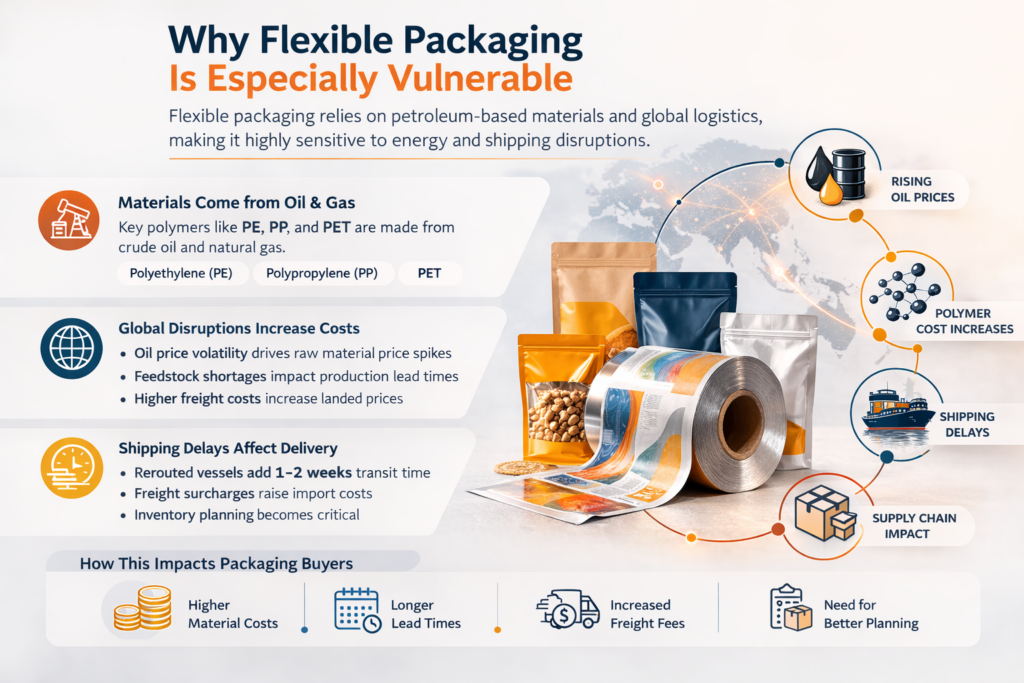
Why Flexible Packaging Is Especially Vulnerable
Flexible packaging materials such as pouches, films, and laminates rely on several key polymers including polyethylene (PE), polypropylene (PP), and polyethylene terephthalate (PET).
These materials originate from petrochemical feedstocks derived from crude oil and natural gas. When energy supply chains are disrupted, the cost of these materials typically increases almost immediately.
Industry advisories indicate that the current Middle East crisis is already pushing global oil and natural gas prices higher, which directly raises the cost of polymer feedstocks used in packaging production.
This creates two immediate impacts for packaging buyers. Material prices increase and production costs become more volatile.
Manufacturers typically pass these increases downstream to customers purchasing flexible packaging products.
Freight Disruptions Are Compounding the Problem
Shipping costs are rising at the same time.
Many shipping lines have been forced to reroute vessels away from high-risk areas in the Middle East. These changes increase travel distances and fuel consumption.
Some container services that normally travel through the Suez Canal region are now routing around the Cape of Good Hope. This can add approximately 3,500 nautical miles and up to two weeks of transit time to certain shipping routes.
Longer routes create several additional problems including increased fuel costs, delayed shipments, container shortages, and higher freight rates.
Shipping companies have already implemented new surcharges to offset these costs. Emergency conflict surcharges ranging from approximately $1,500 to $4,000 per container are being applied to some affected routes.
These surcharges ultimately impact the landed cost of imported goods, including packaging materials.
The Impact on Packaging Imported from China
Many North American brands source flexible packaging from Chinese manufacturers because of their competitive pricing and advanced printing capabilities.
China remains the global hub for production of custom stand-up pouches, printed rollstock, barrier films, sachets, stick packs, and laminated packaging structures.
When global logistics disruptions occur, the entire supply chain between Chinese factories and Western markets becomes vulnerable.
The current crisis affects this trade route in several ways.
First, raw material prices increase. Chinese packaging factories purchase polymer resins at globally influenced prices, so rising oil costs immediately increase resin prices.
Second, shipping times can become longer. If ocean carriers reroute vessels, shipments from Asia to Europe and North America may experience delays of one to two additional weeks.
Third, freight surcharges increase transportation costs. Emergency surcharges and bunker fuel adjustments add to overall shipping expenses.
Finally, production planning becomes more difficult. Packaging manufacturers may face challenges forecasting raw material availability if petrochemical supply chains become unstable.
For brands that rely on overseas packaging production, these factors combine to create unpredictable cost fluctuations.
Why the Packaging Industry Is Watching This Crisis Closely
The flexible packaging sector is closely tied to the global energy market.
A disruption affecting oil supply quickly spreads through the petrochemical industry and eventually reaches packaging production.
Current industry alerts highlight two primary areas of concern.
The first is raw material volatility. Petrochemical feedstocks used for packaging films are expected to increase in price as global energy markets react to the crisis.
The second is logistics disruption. Shipping delays and freight surcharges could affect delivery timelines and inventory planning.
Manufacturers and suppliers are advising customers to plan purchases several months ahead in order to avoid potential supply gaps.
For companies that depend on consistent packaging supply, proactive planning is becoming increasingly important.
Strategies Brands Should Consider Right Now
Companies that rely on flexible packaging imports should consider several strategic steps to reduce risk during supply chain disruptions.
One approach is securing pricing early. When raw material costs are volatile, locking in production pricing ahead of time can help prevent sudden cost increases. Many manufacturers recommend placing orders sooner rather than waiting for market conditions to stabilize.
Another important strategy is increasing inventory buffers. Brands that typically maintain minimal packaging inventory may need to build additional stock. Maintaining three to six months of packaging inventory can help protect against shipping delays or raw material shortages.
Maintaining close communication with packaging suppliers is also essential. Working closely with suppliers provides visibility into material availability, production timelines, and freight schedules. Suppliers often receive early market signals that may indicate upcoming price changes.
Some companies also choose to diversify their supply chains by working with multiple manufacturing partners across different regions. This approach can reduce risk when disruptions affect specific shipping routes.
Will This Disruption Be Temporary?
The duration of the Strait of Hormuz shipping disruption remains uncertain.
Historically, geopolitical conflicts affecting major shipping corridors have caused supply chain instability lasting anywhere from several weeks to several months.
Shipping companies are monitoring the situation closely and have indicated they will resume normal routes once security conditions improve.
Until conditions stabilize, global logistics networks will continue operating with contingency routes and enhanced risk management measures.
Long Term Implications for Flexible Packaging
Events like this often trigger broader shifts in global supply chains.
Potential long-term impacts could include increased freight cost volatility, greater emphasis on supply chain resilience, higher baseline polymer prices, and more strategic inventory planning.
Companies that treat packaging procurement as a strategic part of their operations rather than simply a commodity purchase are better positioned to adapt to these changes.
Frequently Asked Questions
How does the Strait of Hormuz shipping disruption affect flexible packaging?
Why do oil prices affect flexible packaging costs?
Will flexible packaging prices increase in 2026?
How can companies reduce supply chain risk when importing packaging from China?
Could shipping delays impact packaging delivery timelines?
The Bottom Line
The Strait of Hormuz shipping disruption is already affecting industries that rely on petrochemical materials and international shipping routes.
For companies sourcing flexible packaging from China, the effects are likely to appear in three key areas. Polymer raw material costs are rising, shipping times may become longer, and freight surcharges are increasing.
Although the full economic impact remains uncertain, companies that act early by securing production capacity, planning inventory levels, and maintaining close communication with suppliers can significantly reduce supply chain risk.
The flexible packaging industry depends heavily on global trade. When geopolitical events disrupt major maritime routes, the consequences quickly ripple across manufacturing, logistics, and packaging supply chains worldwide.
Businesses that understand these dynamics are better positioned to respond proactively rather than reacting after costs and delays escalate.
What you should read next
Tom Moriarty
General Manager, Packaging Studio
Tom Moriarty is General Manager at Packaging Studio, with 15+ years’ experience across commercial print and packaging. He has worked closely with brands, suppliers, and production teams, giving him a practical view of how the industry is changing and what those changes mean for businesses. His industry insights focus on trends, challenges, and commercial shifts that affect packaging decisions in the real world.