
Understanding State-Specific Cannabis Packaging Laws
By
••
16 min read
•Compliance & Regulation
There is no single “universal” cannabis packaging law in the United States. There are roughly 38 of them — one for every state that has legalized medical or recreational cannabis.
Each state writes its own rules for symbols, warning copy, font sizes, child-resistance certifications, and what counts as appealing to minors. A label that ships compliantly in California can pull a product recall in Illinois. The “Universal Cannabis Symbol” itself differs from state to state — Alaska’s triangle is not Colorado’s exclamation mark, and neither matches Illinois’ black-on-white minimum-size rule.

Why Cannabis Packaging Laws Matter
Cannabis packaging laws are not bureaucratic red tape — they exist to prevent accidental ingestion by children, to keep products tamper-evident in the supply chain, and to put accurate dose and warning information in the consumer’s hand. Non-compliance carries real consequences: fines, mandatory product recalls, suspended licences, and in repeat cases, loss of the right to operate.
The packaging itself is doing legal work. The pouch, the jar, the carton, the label — each piece has compliance demands attached. For most cannabis brands operating multi-state, the practical impact is that artwork files have to be built per-state, not per-product. If you’re sourcing custom stand-up pouches for flower or printed labels for jars and cartridges, plan for a label variant per jurisdiction.
Common Requirements Across States
While cannabis packaging laws vary by state, several requirements appear across nearly every jurisdiction:
1. Child-Resistant Packaging
Child-resistant packaging is a baseline requirement across all states where cannabis is legal. It must be difficult for children under five to open, reducing accidental ingestion risk. The U.S. Consumer Product Safety Commission (CPSC) sets the qualifying standard under 16 CFR § 1700.20 — most state regulations reference the CPSC test directly, which means a pouch or container that passes federal child-resistance testing is generally accepted nationwide.
2. Tamper-Evident Seals
Most states require tamper-evident seals on cannabis packaging. The seal is what tells the consumer the product hasn’t been opened, contaminated, or swapped between the manufacturer and the dispensary counter. Heat-sealed pouches, induction-sealed jar liners, and shrink bands all satisfy the requirement.
3. Opaque Packaging
Many states require packaging to be opaque so the contents are not visible from outside. This is a deliberate design choice — reducing visual appeal to minors and aligning with broader public-health goals around discreet, non-promotional packaging.
Labeling Requirements
Beyond the structural packaging, labels carry the bulk of the compliance load. States require specific information — potency, batch numbers, manufacturer details, warnings — to be displayed in defined locations, at defined sizes.
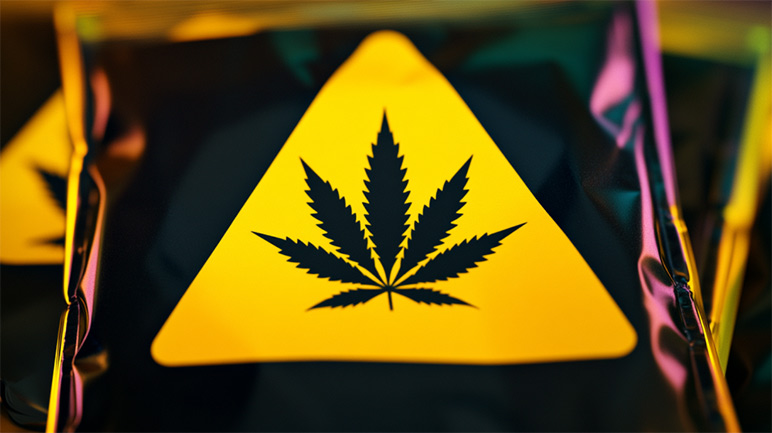
The Universal Cannabis Symbol is the most visible labeling element. Required by every legalized state under their version of a Marijuana Legalization Act, the symbol signals at a glance that a container contains cannabis. But the design is anything but universal.
What Is the Universal Cannabis Symbol?
The Universal Cannabis Symbol is a mandatory label that must appear on any product containing THC. Its job is simple: ensure that anyone — including someone unfamiliar with cannabis — can identify the product at a glance and avoid accidental consumption. It’s the single most-recognised compliance mark on a cannabis pack, and the one regulators check first.
The Varied Look of the Universal Cannabis Symbol
“Universal” is a misnomer. Each state that has legalized cannabis has designed its own symbol. They share common visual elements but no two are identical:
- Marijuana leaves: Many symbols incorporate a leaf — the most recognised cannabis icon.
- THC letters: Several states embed “THC” directly in the mark to flag the psychoactive compound.
- Triangles: Often used as a warning shape — Alaska’s symbol is a black triangle.
- Exclamation marks: Used to draw immediate attention to cannabis content.
Each element carries the same underlying message: “this is a cannabis product.” The execution differs because the regulators differ.
Why Do These Symbols Differ from State to State?
Cannabis remains federally illegal under the Controlled Substances Act. With no federal framework setting the design, each state has authored its own symbol, minimum size, and color requirements. The result is the patchwork below: a different mark, often a different size, sometimes a different placement rule, for every legal market.
If cannabis is rescheduled or descheduled federally, expect a true universal symbol to emerge. Until then, the table below is the operating reality.
Alabama (Medical)
Regulator: Medical Cannabis Commission
Alabama Cannabis Labeling Information:
- Minimum Size: N/A
- Required Colors: N/A
- Required Symbol Background: N/A
- Placement: Labels, packages, and containers must display: “Keep out of reach of children.” If space allows, or as an insert, include: “WARNING: This product may make you drowsy or dizzy. Do not drink alcohol with this product. Use caution when operating machinery. Consult a physician before combining with other medications. Women who are breastfeeding, pregnant, or planning to become pregnant should discuss use with their physician.” [Ala. Code § 20-2A-63]
- Other Notes: Packaging must not appeal to minors or feature images like toys or cartoons that could attract children.
Alaska (Recreational)
Regulator: Alcohol & Marijuana Control Office
[Image: Mandatory Cannabis Product Symbol Alaska — Alaska-Universal-Cannabis-Symbol-SVG]
- Minimum Size: Recommended minimum width of the black triangle is 1/2 inch (12.7 mm)
- Required Colors: Contrasting Colors
- Required Symbol Background: Dark Background
- Placement: The black triangle symbol must be displayed on the retail packaging or labeling of every cannabis product. [17 AAC 303.710]
- Other Notes: Ensure the symbol is clearly visible and adheres to the recommended minimum size and color contrast requirements.
Arizona (Recreational)
Regulator: Department of Health Services
Arizona Cannabis Labeling Information:
- Minimum Size: N/A
- Required Colors: N/A
- Required Symbol Background: N/A
- Placement: The label on cannabis products must include the following statement: “ARIZONA DEPARTMENT OF HEALTH SERVICES’ WARNING: Marijuana use can be addictive and can impair an individual’s ability to drive a motor vehicle or operate heavy machinery. Marijuana smoke contains carcinogens and can lead to an increased risk for cancer, tachycardia, hypertension, heart attack, and lung infection. KEEP OUT OF REACH OF CHILDREN.” [A.A.C. R9-18-305]
- Other Notes: Ensure all required information is clearly visible and complies with Arizona’s child-resistant packaging and labeling regulations. The universal symbol for cannabis must also be included.
Arkansas (Medical)
Regulator: Department of Health
Arkansas Cannabis Labeling Information:
- Minimum Size: N/A
- Required Colors: N/A
- Required Symbol Background: N/A
- Placement: Labels on cannabis products must include the following statement: “Compliant with the State of Arkansas Medical Marijuana Amendment 98. For use by qualified patients only. Keep out of reach of children. Marijuana use during pregnancy or breastfeeding poses potential harms. This product is not approved by the FDA to treat, cure, or prevent any disease.” [Ark. Code Ann. § 5-64-401]
- Other Notes: Packaging must be child-resistant and designed to minimize appeal to minors. Labels must also include the product’s potency, batch number, and the name of the dispensing facility.
California (Recreational)
Regulator: Department of Cannabis Control
California Cannabis Labeling Information:
- Minimum Size: The universal symbol must be at least 1 inch (25.4 mm) in width
- Required Colors: The universal symbol must be black, white, or red.
- Required Symbol Background: The universal symbol must have a contrasting background.
- Placement: The universal symbol and required warning labels must be displayed on the retail packaging or labeling of every cannabis product. [Cal. Bus. & Prof. Code § 26120]
- Other Notes: Labels must include the following warning statement: “WARNING: This product contains cannabis. Cannabis use can impair concentration, coordination, and judgment. Do not operate a vehicle or machinery under the influence of cannabis. Keep out of reach of children.” Additionally, ensure that packaging is child-resistant and does not appeal to minors.
Connecticut (Recreational)
Regulator: Department of Consumer Protection
Connecticut Cannabis Labeling Information:
- Minimum Size: The universal symbol must be at least 1 inch (25.4 mm) in width.
- Required Colors: The universal symbol must be displayed in contrasting colors.
- Required Symbol Background: The symbol must be on a contrasting background.
- Placement: The universal symbol and required warning labels must be displayed on the retail packaging or labeling of every cannabis product. [Conn. Gen. Stat. § 21a-408d]
- Other Notes: Labels must include the following warning statement: “WARNING: This product contains cannabis. Cannabis use may impair your ability to drive or operate machinery. Keep out of reach of children. This product has not been evaluated by the FDA and is not intended to diagnose, treat, cure, or prevent any disease.” Packaging must be child-resistant and designed to minimize appeal to minors.
Colorado (Recreational)
Regulator: Department of Revenue Marijuana Enforcement Division
[Image: Colorado Universal Symbol — Colorado-universal-symbol.svg]
Colorado Cannabis Labeling Information:
- Minimum Size: The universal symbol must be at least 1 inch (25.4 mm) in width.
- Required Colors: The universal symbol must be black, white, or a contrasting color.
- Required Symbol Background: The symbol must be displayed on a contrasting background.
- Placement: The universal symbol and required warning labels must be displayed on the retail packaging or labeling of every cannabis product.
- Other Notes: Labels must include the following warning statement: “WARNING: Cannabis use can impair your ability to drive or operate machinery. Keep out of reach of children. This product has not been evaluated by the FDA and is not intended to diagnose, treat, cure, or prevent any disease.” Packaging must be child-resistant and should not appeal to minors. [1 CCR 212-1, Rule M 1002]
Delaware (Recreational)
Regulator: Office of Medical Marijuana
Delaware Cannabis Labeling Information:
- Minimum Size: The universal symbol must be at least 1 inch (25.4 mm) in width
- Required Colors: The universal symbol must be displayed in contrasting colors.
- Required Symbol Background: The symbol must be on a contrasting background.
- Placement: The universal symbol and required warning labels must be displayed on the retail packaging or labeling of every cannabis product. [16 Del. C. § 4905A]
- Other Notes: Labels must include the following warning statement: “WARNING: Cannabis use can impair your ability to drive or operate machinery. Keep out of reach of children. This product has not been evaluated by the FDA and is not intended to diagnose, treat, cure, or prevent any disease.” Packaging must be child-resistant and designed to minimize appeal to minors.
District of Columbia
Regulator: Alcoholic Beverages Regulation Administration
District of Columbia Cannabis Labeling Information:
- Minimum Size: The universal symbol must be at least 1 inch (25.4 mm) in width
- Required Colors: The universal symbol must be in black and white or contrasting colors.
- Required Symbol Background: The symbol must be displayed on a contrasting background.
- Placement: The universal symbol and required warning labels must be displayed on the retail packaging or labeling of every cannabis product.
- Other Notes: Labels must include the following warning statement: “WARNING: Cannabis use can impair your ability to drive or operate machinery. Keep out of reach of children. This product has not been evaluated by the FDA and is not intended to diagnose, treat, cure, or prevent any disease.” Additionally, labels must include: “There may be health risks associated with the ingestion or use of this product. Please consult your physician if you have any questions or concerns.” Packaging must be child-resistant and designed to minimize appeal to minors.
Florida
Regulator: Office of Medical Marijuana Use
Florida Cannabis Labeling Information:
- Minimum Size: The universal symbol must be at least 1 inch (25.4 mm) in width.
- Required Colors: The universal symbol must be displayed in contrasting colors.
- Required Symbol Background: The symbol must be on a contrasting background.
- Placement: The universal symbol and required warning labels must be displayed on the retail packaging or labeling of every cannabis product.
- Other Notes: Labels must include the following warning statement: “WARNING: Cannabis use can impair your ability to drive or operate machinery. Keep out of reach of children. This product has not been evaluated by the FDA and is not intended to diagnose, treat, cure, or prevent any disease.” Additionally, labels must include the statement: “There may be health risks associated with the ingestion or use of this product. Please consult your physician if you have any questions or concerns.” [Fla. Admin. Code Ann. r. 64-4.013]
Packaging must be child-resistant and designed to minimize appeal to minors. Labels should also include product-specific details such as THC and CBD content, allergens, and the product’s expiration date, if applicable.
Georgia
Regulator: GA Access to Medical Cannabis Commission
Georgia Cannabis Labeling Information:
- Minimum Size: The universal symbol must be at least 1 inch (25.4 mm) in width
- Required Colors: The universal symbol must be in contrasting colors.
- Required Symbol Background: The symbol must be displayed on a contrasting background.
- Placement: The universal symbol and required warning labels must be displayed on the retail packaging or labeling of every cannabis product. [Ga. Comp. R. & Regs. r. 511-6-1-.04]
- Other Notes: Labels must include the following warning statement: “WARNING: Cannabis use can impair your ability to drive or operate machinery. Keep out of reach of children. This product has not been evaluated by the FDA and is not intended to diagnose, treat, cure, or prevent any disease.” Additionally, labels must include: “There may be health risks associated with the ingestion or use of this product. Please consult your physician if you have any questions or concerns.” Packaging must be child-resistant and designed to minimize appeal to minors. Labels must also include product-specific details such as THC and CBD content, allergens, and an expiration date if applicable.
Hawaii
Regulator: Department of Health
Hawaii Cannabis Labeling Information:
- Minimum Size: N/A
- Required Colors: N/A
- Required Symbol Background: N/A
- Placement: Labels must be affixed to the retail packaging or labeling of every cannabis product and include all mandatory information. [Haw. Rev. Stat. § 329D-11]
- Other Notes: Labels must include the following warning statement: “WARNING: This product contains cannabis, a schedule I controlled substance. Keep out of reach of children. Cannabis use may be impairing and could be habit-forming. There may be health risks associated with the consumption of this product.” Additionally, labels must specify the THC content, CBD content, and other active ingredients, and must include the name of the dispensary, batch number, and expiration date, if applicable. Packaging must be child-resistant and designed to minimize appeal to minors. [Haw. Admin. Rules § 11-850-91]
Illinois
Regulator: Cannabis Control Office
Illinois Cannabis Labeling Information:
- Minimum Size: The universal symbol must be at least 0.75 inches (19.05 mm) in height and width. [410 ILCS 705/55-21]
- Required Colors: The universal symbol must be in black and white. [410 ILCS 705/55-21]
- Required Symbol Background: The symbol must be displayed on a white background. [410 ILCS 705/55-21]
- Placement: The universal symbol and required warning labels must be displayed on the primary panel of the retail packaging or labeling of every cannabis product. [410 ILCS 705/55-21]
- Other Notes: Labels must include the following warning statement: “WARNING: This product contains cannabis. Keep out of reach of children and animals. Cannabis products may only be possessed or consumed by persons 21 years of age or older unless the person is a registered qualifying patient. Cannabis can impair concentration, coordination, and judgment. Do not operate a vehicle or machinery under the influence of this drug. There may be health risks associated with the consumption of this product.” Additionally, labels must include product-specific details such as the THC and CBD content, the name of the licensed cultivation center, the product’s batch number, and an expiration date if applicable. Packaging must be child-resistant and designed to minimize appeal to minors. [410 ILCS 705/55-21]
The Importance of Cannabis Labeling
The Universal Cannabis Symbol is more than a regulatory tick-box — it’s the fastest visual identifier of THC content for someone who isn’t looking for it. Children, partners reaching into the wrong drawer, first responders triaging a possible accidental ingestion: they all need to know in under a second that a product contains cannabis. That’s the work the symbol does.
As more states legalize, the operational answer for cannabis brands is the same: build artwork files per-state, treat the label as a compliance artefact first and a brand artefact second, and re-verify any state’s requirements before printing a new run — rules change.
Sustainability in Cannabis Packaging
Cannabis-specific sustainability rules are emerging fastest in California, where SB 343 and the broader Truth in Labeling Act apply chasing-arrows and recyclability-claim restrictions to cannabis packaging the same way they apply to consumer goods. The practical tension is that child-resistance, opacity, and tamper-evidence requirements push brands toward multi-layer films and plastic-heavy structures — exactly the materials that fail post-consumer recycling streams.
The workable answers are mono-material pouches (PE-only or PP-only structures that pass child-resistance testing while remaining recyclable), refillable hard packs with mono-material inner pouches, and PCR content where regulators allow it. Sustainable packaging is moving from “nice to have” to category expectation — brands not investing now will be behind in 18 months.
Compliance Challenges
Operating multi-state means operating multi-spec. Every new market adds a label variant, a warning wording, sometimes a structural change. A few practical patterns:
- Build a state matrix. Symbol, minimum size, required warnings, font minimums, child-resistance certification reference, sustainability claim restrictions — one row per state. This becomes the file artwork briefs every label.
- Version-control your labels. Treat state variants like software releases. Each one has a regulation reference, a date, and a sign-off.
- Re-verify before reprint. States update labeling rules — sometimes annually, sometimes mid-year. The label you printed in 2024 may not be the label that ships compliantly in 2026.
- Talk to your packaging supplier early. Some compliance requirements are file-level (CMYK rules, font outlining) but others are structural (child-resistance certifications, opacity, barrier film selection). Catching them at quote stage avoids reworked artwork.
Cannabis packaging compliance is a moving target with 38 simultaneous answers. The work is unglamorous — tracking symbol minimum sizes, warning copy, font weights, certification references — but the consequences of getting it wrong are real, immediate, and expensive.
If you’re producing packaging for a new market or reprinting existing artwork, responsibility for regulatory compliance sits with you. We provide print specifications and artwork guidance to help you prepare files correctly. Start with the custom stand-up pouches or custom labels product page, or get in touch with questions about file setup.
Getting compliant packaging
If you’re unsure about any part of the artwork file setup, our team can talk you through it before anything goes to print.
Ron Perry
Print Solutions Engineer, Packaging Studio
Ron Perry is Print Solutions Engineer at Packaging Studio, with 23+ years’ experience in commercial print, packaging production, and technical print setup. He focuses on the practical details that make packaging production-ready, including artwork specifications, print processes, labelling requirements, material constraints, and compliance checks. His compliance posts help businesses understand what needs to be considered before packaging artwork goes to print.