Sustainable Packaging Without Greenwashing

Sustainable packaging without the greenwashing means delivering measurable, verifiable improvements to environmental and social outcomes free of exaggeration and vague claims. At Packaging Studio, we ground decisions in data: materials with traceable origins, designs that reduce waste and emissions, and production practices backed by certifications and transparent reporting. This page outlines how to recognise genuine sustainability, verify real eco-impact through materials and production methods, and select packaging that lowers footprint while maintaining product protection and brand integrity.
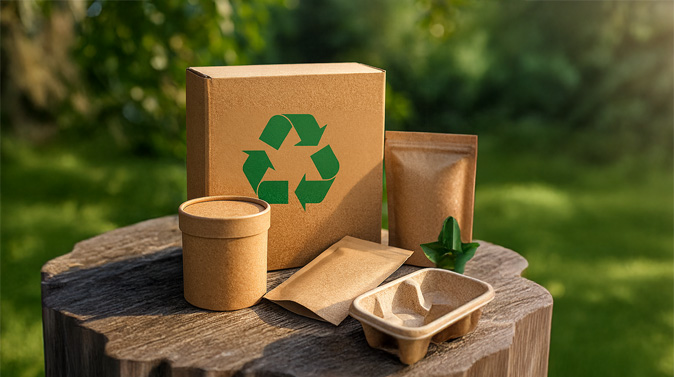
When customers ask what is sustainable packaging, we answer with evidence, not slogans prioritising environmentally friendly packaging and eco-friendly options that are proven in the markets where they’re used.
Sustainable packaging only counts when the benefits are measurable, verifiable, and grounded in real infrastructure.
Table of Contents
What Sustainable Packaging Really Means
What is sustainable packaging in practice? Sustainable packaging without the greenwashing is packaging engineered to reduce environmental impact across its entire lifecycle raw material extraction, converting and manufacturing, transport, use, and end-of-life supported by evidence rather than marketing spin.
The objective is to cut waste, emissions, and resource consumption while ensuring performance, safety, and regulatory compliance. This approach delivers environmentally friendly packaging and eco-friendly packaging solutions that are designed around real recovery systems and operational efficiency.
Core principles of credible sustainable packaging include:
- Material responsibility: prioritising renewable, recycled, and responsibly sourced substrates with traceable supply chains and clear chain-of-custody.
- Right-sizing: optimising formats to minimize material use and dimensional weight without compromising protection.
- Design for recovery: enabling reuse, recycling, or composting in systems that actually exist in target markets, not just in theory.
- Clean chemistry: selecting inks, adhesives, and coatings that avoid hazardous substances and meet food-contact and consumer safety standards.
- Operational efficiency: reducing energy, water, scrap, and defects during converting and printing.
- Data transparency: disclosing metrics such as recycled content, certified fibre, carbon footprint per unit, and recovery rates.
Lifecycle assessment (LCA) is central to credible decision-making. An LCA quantifies impacts including greenhouse gas emissions, water use, eutrophication, and resource depletion at each stage of a package’s lifespan. LCA helps compare materials, highlight hotspots (like transport or end-of-life), and guide the most effective improvements.
Packaging Studio employs LCA insights to inform substrate selection, structural optimisation, and claim validation with third-party data. These insights help ensure sustainable packaging and eco friendly packaging choices avoid hidden trade-offs and deliver real-world benefits.
How to Verify Real Eco-Impact Through Materials and Production Methods
Verifying that packaging delivers real environmental benefits requires evidence across materials, production, and end-of-life. Start with the substrate: fibre should have documented recycled content and certifications that ensure responsible forestry; plastics should be mono-material where feasible and designed to move through established recycling streams; bio-based options must demonstrate legitimate feedstock sourcing and land-use practices.
This is how we define what is sustainable packaging at Packaging Studio: environmentally friendly packaging guided by data and aligned with infrastructure.
Material verification steps:
- Recycled content documentation: request guaranteed percentages and source breakdown (post-consumer vs. pre-consumer) with supplier attestations or third-party audits.
- Fibre certifications: confirm FSC or equivalent certification with chain-of-custody numbers that can be traced back to the mill.
- Polymer traceability: obtain resin identification, supplier declarations, and evidence of compatibility with regional MRFs.
- Compostability validation: rely on standards such as BPI certification and ensure access to industrial composting in target markets.
- Chemistry safety: specify water-based inks, low-VOC formulations, and coatings without PFAS or heavy metals, supported by safety data sheets and regulatory compliance records.
Production method verification:
- Energy and emissions reporting: ask for facility-level energy mix, renewable sourcing, and carbon intensity per converted unit; prioritise plants with verified reduction programs.
- Waste and scrap metrics: review conversion yield, scrap ratios, and closed-loop recycling programs for trim and offcuts.
- Process certifications: look for ISO 14001 (environmental management), ISO 9001 (quality), and documented continuous improvement plans.
- Ink and adhesive management: validate solvent recovery or water-based systems, low-VOC practices, and compliance with food-contact regulations.
- Transport optimisation: confirm pack-out efficiency, cube utilisation, and mode-shift strategies that reduce freight emissions; review data for dimensional weight improvements and shipment consolidation.
End-of-life validation is equally critical. Claims must align with infrastructure: “recyclable” should mean accepted curbside in most target regions and actually processed by MRFs; “compostable” should reflect real access to facilities and clear consumer instructions.
Packaging Studio publishes recovery guidance, regional acceptance notes, and performance data to ensure claims match what customers can do in practice. This diligence delivers sustainable packaging without the greenwashing by grounding eco-friendly options in reality.
Spotting Greenwashing in Packaging Claims
Greenwashing occurs when environmental benefits are overstated or misrepresented. In packaging, it misleads decision-makers, erodes trust, and can steer investments toward options that appear sustainable but raise overall impacts. Understanding what is sustainable packaging helps teams filter out noise and focus on environmentally friendly packaging backed by real data.
Common greenwashing tactics include:
- Vague language: broad terms like “eco-friendly” or “green” without specific metrics.
- Hidden trade-offs: emphasising one attribute (e.g., compostable) while ignoring higher production emissions or limited end-of-life access.
- Irrelevant claims: spotlighting features unrelated to the product’s footprint.
- Imagery over substance: nature visuals in place of data.
- No end-of-life clarity: calling a material “recyclable” without confirming local acceptance and real recovery rates.
Real examples include products labelled “biodegradable” that only break down under industrial conditions that most consumers cannot access; plastics tagged “recyclable” that are rarely accepted curbside; and plant-based substrates tied to deforestation or high fertiliser use.
Packaging Studio counters these pitfalls by specifying precise attributes, referencing third-party standards, and publishing LCA-informed metrics that demonstrate actual impact reduction. This approach keeps sustainable packaging and eco-friendly packaging claims honest and actionable.
Making Informed Packaging Decisions
To identify genuinely sustainable solutions, demand specific, verifiable information that aligns with the infrastructure and regulations where your products ship and are used. Evaluate materials, performance, and end-of-life pathways based on evidence not color schemes or general eco terminology. Choose eco friendly options that deliver measurable benefits and qualify as environmentally friendly packaging according to local acceptance and recovery rates.
Evaluation criteria:
- Alignment with local recovery systems: confirm acceptance by MRFs or compost facilities in target markets, and the likelihood of actual recovery.
- Verified material claims: check documented recycled content, fibre certifications like FSC, and complete chain-of-custody for substrates and additives.
- Performance and efficiency: right-sized designs that reduce material weight, improve cube utilisation, lower transport emissions, and minimise damage-related returns.
- Chemical safety: specify low-VOC, water-based inks, and coatings compliant with food-contact standards; avoid PFAS and heavy metals.
- Quantified impacts: request LCA results, emissions per unit, and clear reduction targets with baseline and methodology disclosed.
Questions to ask packaging providers:
- What percentage of recycled content is guaranteed, and how is it independently verified?
- Is the packaging curbside recyclable or compostable in my target markets, and what are the acceptance rates?
- Which third-party certifications or standards apply (e.g., FSC, BPI), and can you share the certificates?
- Do you provide LCA data or carbon footprint estimates per SKU, including system boundaries and assumptions?
- How are inks, coatings, labels, and adhesives managed to prevent contamination that hinders recycling?
- What design changes will reduce material use and freight emissions without increasing breakage or returns?
Helpful resources include municipal recycling guidelines, compost facility databases, certification bodies (FSC for fibre, BPI for compostability), and third-party LCA tools and reports. Packaging Studio supplies product specifications with recovery guidance and documentation to support audits, customer requirements, and sustainability reporting.
Our recommendations emphasise sustainable packaging without the greenwashing, ensuring eco-friendly packaging choices are grounded in verified data and practical systems.
Best Practices for Genuine Sustainable Packaging
Credible sustainability starts with material integrity, functional design, and transparent communication. Combine responsibly sourced substrates with efficient structures and ensure end-of-life routes exist and are accessible in the markets you serve. These best practices turn sustainable packaging claims into environmentally friendly packaging outcomes that customers can trust.
Materials that contribute to lower impact:
- High-recycled-content fibre boards with verified chain-of-custody.
- Mono-material films designed for improved recyclability in established streams.
- Water-based inks and barrier coatings formulated without PFAS or heavy metals.
- Reusable systems for B2B transit packaging where reverse logistics are practical and cost-effective.
Design strategies to reduce impact:
- Simplify components: prefer mono-material structures and easy-to-remove labels.
- Optimise structures: minimise void space, increase cube utilisation, and lower transport emissions.
- Eliminate problematic elements: avoid metallic inks, unnecessary laminates, and non-removable adhesives.
- Design for disassembly: enable users to separate components for recycling or composting.
- Iterate with data: use LCA feedback to fine-tune formats, thicknesses, barriers, and coatings.
Transparent brand communication builds trust and accelerates adoption:
- State concrete facts (e.g., “40% post-consumer recycled content, FSC-certified fibre”) rather than broad environmental claims.
- Provide recovery instructions tailored to common U.S. systems and clearly explain what is and isn’t accepted.
- Share progress and limitations, what’s available today, what’s in pilot, and where infrastructure is still evolving.
- Align marketing with operations: ensure claims match material specs, production capabilities, and end-of-life realities.
Packaging Studio partners with teams to create credible messaging backed by documentation, certifications, and third-party references while continuously refining designs based on performance and environmental data. Our focus on eco friendly options and eco friendly packaging ensures sustainable packaging delivers real impact sustainable packaging without the greenwashing, backed by LCA and operational metrics.
Frequently Asked Questions
How can companies avoid greenwashing in their packaging practices?
Use precise terminology, support claims with certifications and LCA data, and validate end-of-life pathways in target markets. Publish methodologies and assumptions, disclose trade-offs, and update content as infrastructure and materials change. This is the foundation of sustainable packaging without the greenwashing and truly environmentally friendly packaging.
How can consumers identify genuine sustainable packaging?
Look for specific material percentages, recognized certifications, clear recovery instructions, and evidence the packaging is accepted by local facilities. Avoid products that rely on vague descriptors or unverified compostability claims. Prioritize eco-friendly packaging that explains what is sustainable packaging in concrete terms.
What is sustainable packaging without greenwashing?
Packaging that demonstrably reduces environmental impact across its lifecycle, supported by third-party data and communicated with clarity and accuracy, no exaggerations, no misleading labels. It’s environmentally friendly packaging built on real infrastructure and practical design.
Why is greenwashing a concern in the packaging industry?
It misleads decision-makers, undermines trust, and can increase environmental harm by prioritizing solutions that sound sustainable but are not supported by infrastructure or data. Selecting sustainable packaging and eco-friendly packaging based on evidence avoids these pitfalls.
What are the key elements of truly sustainable packaging?
Responsible material sourcing, efficient design, clean chemistry, validated end-of-life routes, and transparent reporting implemented consistently and measured through lifecycle analysis. These elements define what is sustainable packaging and ensure eco-friendly options meet real-world expectations.